Shared state
Several independent parties need to verify the same state and accept changes under agreed rules. Who can participate and change those rules must be clear in advance.
Shared rules between independent businesses? Publicly verifiable digital states? We assess whether blockchain offers an advantage and build the right application. A conventional database may be the better answer.
From value to implementationWhen a responsible operator is accepted, permissions, versioning and a traceable log are usually simpler to implement centrally. A blockchain needs an additional, specific benefit.
Initial technical guidance. Your choices stay on this page and are not transmitted or saved.
A DApp connects a user interface to logic in smart contracts. Users confirm actions with a wallet, for example. The website, data sources and interfaces still need planned operations.
Several independent parties need to verify the same state and accept changes under agreed rules. Who can participate and change those rules must be clear in advance.
Evidence should be independently verifiable. We compare anchoring it on a blockchain with simpler signatures and logs. Storing an incorrect input does not make it true.
An application needs to work with existing smart contracts. We assess the network, interfaces, fees, key model and dependencies before considering a token of your own.
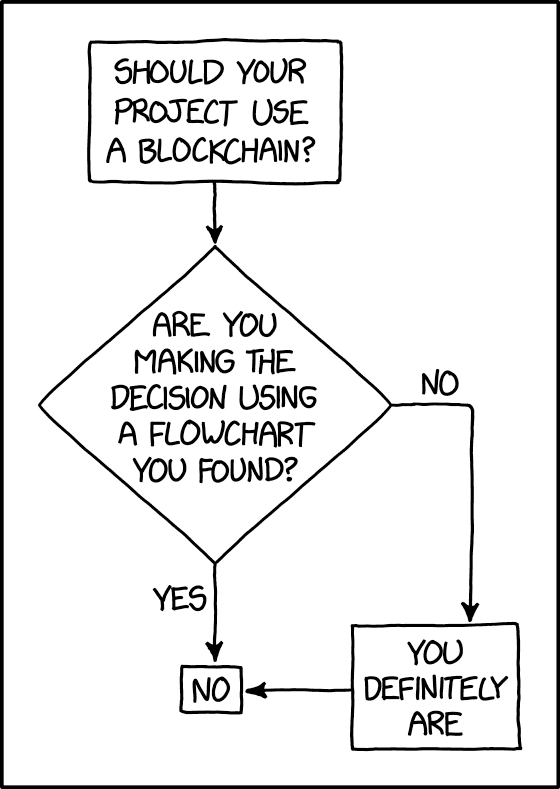
Compare approaches to a business idea: database, signed evidence or blockchain.
€499.00
one-off, including 19% VATTechnical assessment using the process information provided. No smart contract audit or legal, investment or tax advice. Development, transaction fees, RPC services, hosting and external reviews are separate. A recommendation for a conventional database is a complete and valid outcome.
A bounded workflow on an agreed test network: interface, wallet connection, smart contract logic and integration with existing systems.
Scope, price and schedule follow clarification. A test network prototype is not yet an application approved for real assets.
Request a DApp proposalKey management, responsibilities, monitoring, updates and emergency procedures become part of the operations plan. External security reviews are priced separately.
Transactions cost money, confirmations take time and published contract logic can only be changed using procedures prepared in advance. Wallets and recovery affect usability. Open networks do not automatically make your interface or external data sources resilient.
Technical background: Ethereum: DApp architecture, benefits and limitations. The project assessment also considers solutions without blockchain; legal questions and use with real assets require a separate assessment.