E-invoicing and Peppol: clarity before buying new software.
What is already required, what can your existing software do and when is Peppol useful? Separate invoice format, transmission and workflow with a self-check, free PDF guide and clearly scoped advice.
Read the German original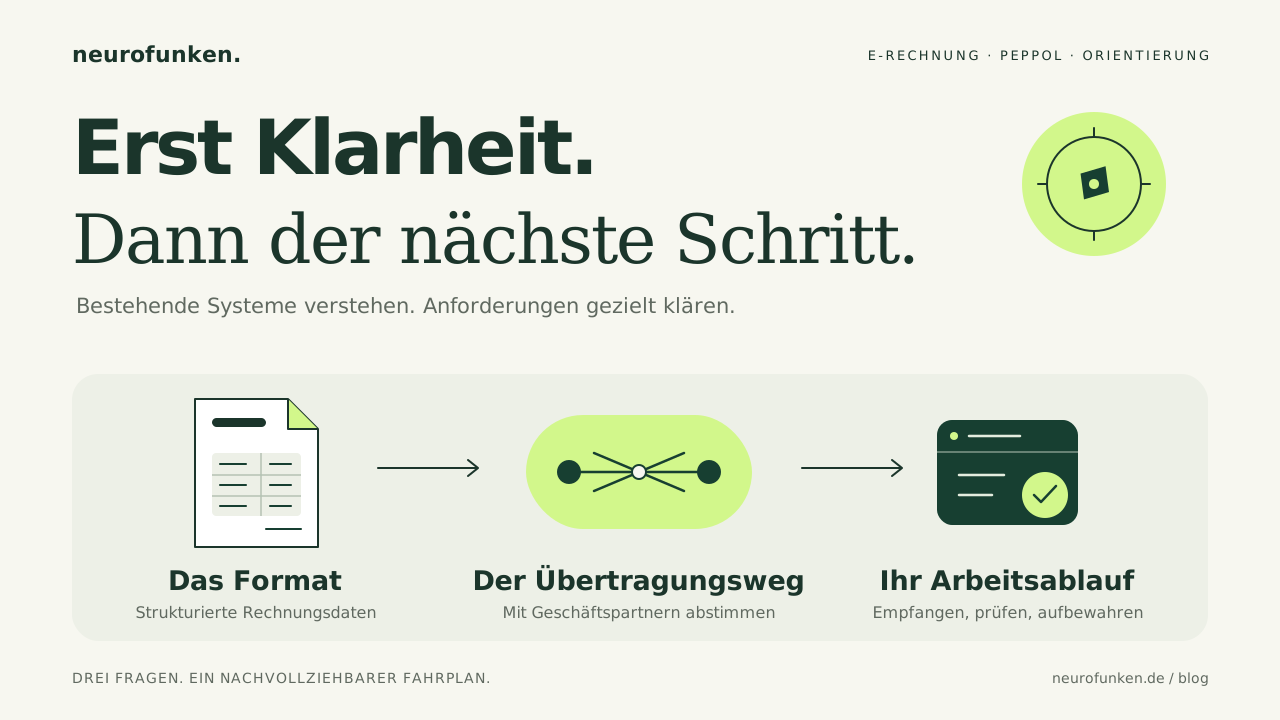
Three questions help you get started
One invoice arrives as a PDF by email, another as an XML file. A customer names Peppol as the preferred transmission route. To decide the next step, separate these requirements: what format contains the invoice data, how does it reach the recipient, and who checks and processes it there?
An e-invoice within the meaning of Germany's VAT Act contains structured electronic data that enables electronic processing. A simple PDF without such data is classified as another type of invoice. A familiar view on screen therefore does not establish the actual invoice format. Check this capability specifically in your existing invoicing software.
Receiving and issuing invoices have different rules
As of 9 October 2026, domestic businesses have had to be able to receive e-invoices since 1 January 2025. This also applies to businesses using the German small-business VAT scheme, or Kleinunternehmer. According to the BMF FAQ, an email mailbox is sufficient for receipt. How the invoice is then checked and retained is a separate task.
Transitional rules apply to issuing invoices for the domestic B2B transactions generally covered: until the end of 2026, paper invoices or, with the recipient's consent, other electronic invoices remain possible. For businesses with total turnover in the preceding year of up to and including €800,000, this rule extends to the end of 2027. A separate transitional rule for certain EDI procedures also runs until the end of 2027. These transitional periods end from 2028.
This does not impose an unconditional issuing requirement on every invoice. Under section 34a UStDV, Kleinunternehmer remain exempt from mandatory e-invoice issuance. The BMF explains further exceptions, including certain invoice types and transactions. Your specific circumstances and business partners' requirements are decisive.
Peppol connects the participants
Peppol comprises a network and shared rules for exchanging electronic business documents. Certified service providers connect senders and recipients through Access Points. Peppol also addresses participant identification, supported documents and their transmission. It covers more than an invoice format.
Germany's B2B e-invoicing requirement does not create a general obligation to use Peppol. According to the BMF, no single transmission method is prescribed; email or an interface are among the options. Contracting parties agree the route used in their particular relationship. For public-sector customers, also clarify the specific requirements with the receiving organisation.
Our technical recommendation is to establish which formats and transmission routes your main business partners actually require, then check your software's existing capabilities. If Peppol is needed, you can make a focused comparison of access, recurring costs and required changes.
Check a complete invoice workflow
List the systems in which you create and receive invoices. Ask the vendor about supported input and output formats, existing transmission routes and additional fees. Use suitable test data for the technical check: can the file be received, displayed understandably and processed further? Where does an error appear, and who handles it?
For retention, the BMF explains that at least the structured part of an e-invoice must remain intact in its original form. A printout alone does not replace that original data. Organise storage together with receipt and appoint someone responsible for checking invoices.
Record the results in three columns: already works, needs clarification and needs a change. This prepares a discussion with accounting, your software vendor or technical support, and helps avoid commissioning the same unresolved work more than once.
Free orientation: self-check and PDF guide
Our free self-check asks about receipt, sending, existing systems and Peppol needs. It provides initial guidance for your next steps. The result is based on your answers; it tests neither your software nor a real invoice and does not confirm tax compliance.
The free E-Invoicing & Peppol Guide PDF complements the check as material to read and discuss with your team. Use both to collect open questions and record what your existing solution already supports. The check and brochure are a separate, free starting point.
If you want an individual roadmap
The E-Invoicing & Peppol Roadmap costs €299.00 once, including 19% VAT. We consider one company with up to two existing invoicing systems. The basis is your form responses, online follow-up questions and available vendor information.
You receive a technical assessment of formats and transmission routes, an estimated cost range with stated assumptions, three prioritised next steps and a suitable checklist. One online follow-up round about the delivered roadmap is included. This gives you a concrete basis for planning possible implementation.
The package provides technical orientation. Implementation, provider fees, Access Point contracts and registration are separate. Processing real invoice archives is excluded. The roadmap is not legal or tax advice, certification or a guarantee of tax compliance. If setup or interface development is useful, it is quoted separately.
What does this look like in your work?
We can turn the idea into a sensible next step with you.
Open the free self-check and PDF guide